The Numbers That Matter Most
While cable news obsesses over national polling data, I’ve been tracking something far more telling: the precinct-by-precinct turnout patterns in our city council races. After covering twelve election cycles in this town, I can tell you that democracy’s real pulse beats strongest in the margins of local contests where a swing of forty-seven votes can reshape your daily commute for the next decade.
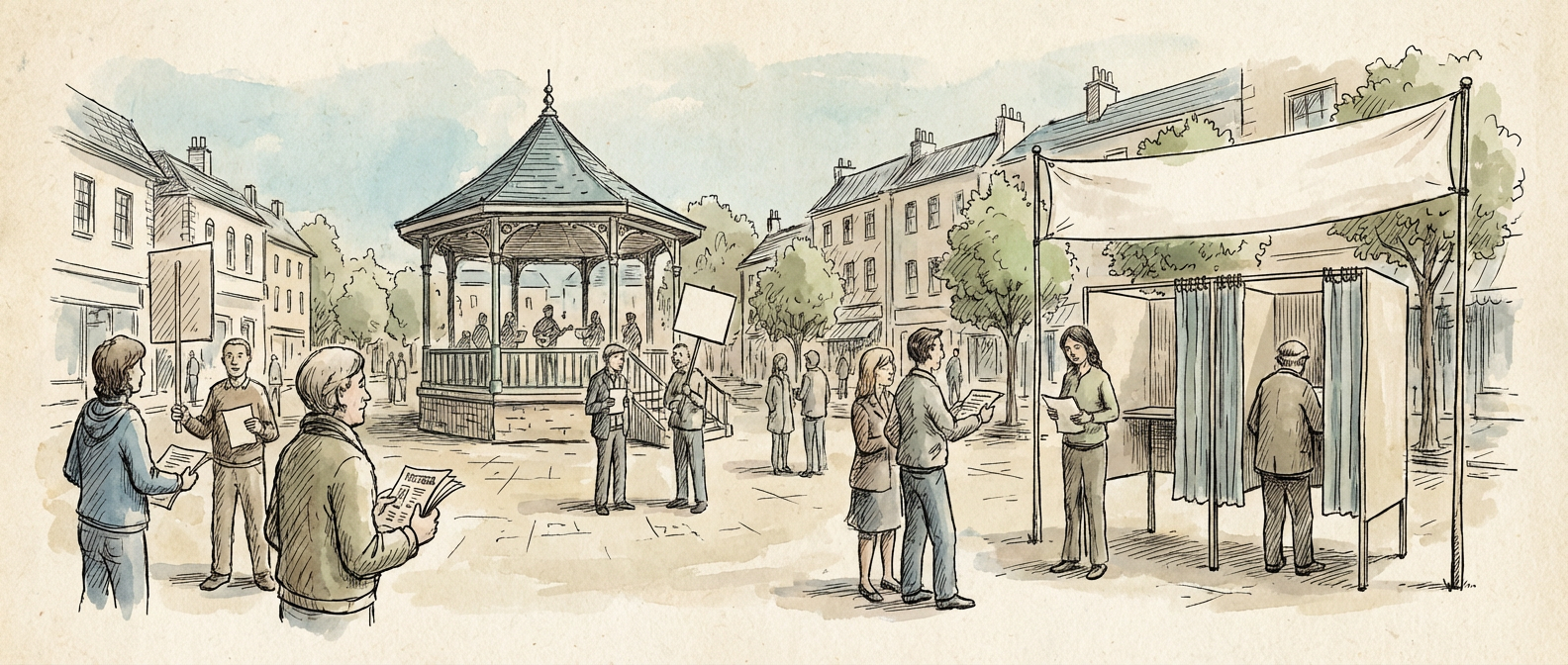
This November, three races on our ballot offer a masterclass in how national political currents translate into hyperlocal consequences. The school board seat in District 3, the mayoral contest, and the contentious city council Ward 2 race each show different aspects of how democracy actually works. Strip away the partisan rhetoric, and you’ll find something more fundamental: neighbors disagreeing about the future they want to build together.
I’ve spent the past six weeks attending candidate forums in church basements and fire station meeting rooms. The acoustics are terrible but the conversations are genuine. What emerges is a picture of local politics that’s both messier and more personal than the national narrative suggests.

When School Board Politics Gets Personal
The District 3 school board race between incumbent Janet Morrison and challenger David Chen captures tensions that go well beyond curriculum debates. Morrison, a retired teacher with twenty-two years in local classrooms, faces Chen, a software engineer whose twins attend Roosevelt Elementary. Their disagreement over the proposed $42 million bond measure shows competing visions of fiscal responsibility that mirror national debates about government spending.
But here’s what the yard signs don’t tell you: both candidates volunteer at the same food pantry on Saturdays. They’ve coached youth soccer together. Chen’s daughter was in Morrison’s fourth-grade class six years ago. This isn’t cable news combat. It’s democracy among people who shop at the same grocery store and attend the same community events.
The bond measure itself highlights how local stakes make abstract policy concrete. The $42 million would fund new science labs, updated electrical systems, and Americans with Disabilities Act compliance upgrades across four elementary schools. Chen argues the district should phase the improvements over eight years instead of four, reducing the immediate tax impact on fixed-income residents. Morrison counters that delayed maintenance becomes exponentially more expensive, pointing to the high school’s HVAC system that cost $300,000 more to replace because the district waited too long.
Their debate gets to a fundamental question facing communities nationwide: how much are we willing to invest in infrastructure today to avoid bigger bills tomorrow? The answer affects every family with children, every senior on a fixed income, and every business owner calculating property tax implications.
The Mayor’s Race and the Art of Local Coalition Building
Mayor Patricia Holbrook’s re-election campaign against challenger Marcus Williams shows how national political divisions play out differently in local contexts. Holbrook, a moderate Democrat, has governed for eight years by building issue-specific coalitions that cross traditional party lines. Williams, running as an independent with libertarian leanings, argues that Holbrook’s pragmatic approach lacks the bold vision needed for the city’s next chapter.
Their real disagreements center on downtown redevelopment, a $15 million project that would transform three blocks of aging storefronts into mixed-use housing and retail space. Holbrook supports the public-private partnership that would use tax increment financing to subsidize private developers. Williams opposes any public subsidy, arguing the market should drive development without taxpayer risk.
The fascinating aspect of this race isn’t the candidates’ positions, but how they’ve assembled their support. Holbrook’s coalition includes the chamber of commerce, the teachers’ union, and the environmental action committee. Williams draws backing from the taxpayers association, young professionals frustrated with housing costs, and small business owners concerned about downtown parking policies. These aren’t traditional left-right divisions. They’re interest-based alliances that form around specific local issues.
Both candidates regularly appear together at community events, maintaining the collegial tone that defines local politics at its best. They disagree on policy but agree on the fundamental challenges facing the city: aging infrastructure, affordable housing shortages, and the need to attract younger residents and businesses. Their campaign shows a healthy democratic process where serious policy differences don’t preclude mutual respect.
Ward 2 and the Infrastructure Reality Check
The Ward 2 city council race offers the starkest example of how local politics intersects with daily life. Incumbent Tom Rodriguez faces challenger Sarah Kim in a contest that hinges on a single, seemingly mundane issue: stormwater management. Yet this technical topic affects every resident’s flood insurance rates, property values, and quality of life.
Rodriguez championed the $8.2 million stormwater improvement project that’s currently disrupting traffic on Maple Street and Oak Avenue. The construction, scheduled to continue through next spring, aims to prevent the flooding that has damaged dozens of homes in the past five years. Kim argues the project’s design is flawed and the cost excessive, proposing alternative solutions that would cost less but take longer to implement.
The candidates’ disagreement gets at broader questions about municipal management and fiscal priorities. Rodriguez emphasizes his engineering background and points to the technical studies supporting the current approach. Kim, a small business owner, focuses on the project’s impact on local commerce and questions whether the city adequately explored cheaper alternatives.
What makes this race particularly illuminating is how it demonstrates the expertise required for effective local governance. Voters must evaluate competing claims about storm drain capacity, soil permeability, and federal flood management standards. The technical complexity of modern municipal government demands elected officials who can either understand these issues themselves or know how to evaluate expert advice.
The Maple Street construction has become a daily reminder that local elections have immediate, tangible consequences. Every commuter who takes the detour through residential neighborhoods, every business owner dealing with reduced foot traffic, and every homeowner calculating flood risk has a stake in this seemingly obscure policy debate.
Democracy’s Ground Game
These three races show why local elections matter more than their typically low turnout suggests. National political trends certainly influence local contests, but community-specific factors ultimately determine outcomes. Candidates succeed or fail based on their ability to address immediate, practical concerns that affect residents’ daily lives.
The most encouraging aspect of this election cycle has been the level of real policy debate. Candidates discuss specific budget line items, infrastructure timelines, and regulatory approaches rather than limiting themselves to broad ideological appeals. Voters have access to detailed information about competing proposals and their fiscal implications.
Local democracy works best when residents engage with these detailed policy discussions rather than treating municipal elections as extensions of national partisan battles. The candidates in our three key races have generally maintained this focus on local issues and practical governance, even when national political currents might push them toward more polarized positions.
As election day approaches, I’ll continue monitoring these races and analyzing the results for insights into broader democratic trends. The precinct maps will tell stories about community priorities, demographic shifts, and civic engagement that extend far beyond our city limits. If you have questions about specific candidates or issues, or if you’ve noticed trends in your own neighborhood that deserve attention, reach out. Local journalism works best as a conversation between reporter and community, and your observations often lead to the most important stories.